Northgate IP

IP counsel
built for
builders.

Northgate IP protects the technical work of software companies, hardware manufacturers and R&D organizations in Seattle and nationwide. Registered patent attorneys hold engineering degrees. Prosecution is tracked by the docket, not by the hour.

847+ Applications filed
94% Allowance rate (2023)
15+ Years prosecuting
3 Registered patent attorneys
Classification Technology & Engineering IP
Jurisdiction USPTO · PCT · EUIPO · WIPO
Client base Software · Hardware · MedTech · Defense
Office 600 University St, Seattle WA 98101

Decision Matrix

What protects what?

Select what you have built. The matrix explains which right applies, what it covers and does not cover, how long protection lasts, and when to file.

// SELECT ASSET TYPE

Services Index

Practice scope

Technical patent schematic drawings on paper Scientist at laboratory workbench with microscope and equipment
PAT

Patent

  • Patent preparation & prosecution

    Software, electronics, mechanical, and medical device inventions. We draft claims that hold under examination, not claims that sound good in a pitch deck. All three attorneys hold engineering or hard-science degrees and have prosecuted claims before the USPTO art units most relevant to deep tech.

  • Provisional applications

    A well-drafted provisional establishes your priority date for 12 months and gives you time to validate the market before committing to full prosecution costs. We write provisionals that describe the invention with sufficient specificity to support the claims you will eventually need — not a summary memo.

  • PCT & foreign filing strategy

    International protection requires a deliberate budget and jurisdiction strategy. We advise on PCT national phase timing, direct filing versus PCT, and which markets actually matter for your product roadmap. We coordinate with a vetted network of foreign associates in 40+ jurisdictions.

  • Freedom-to-operate & patentability opinions

    Before a product launch or a significant R&D investment, you need a technical landscape map. Our FTO opinions identify claim elements that may read on your implementation and recommend design-around options. Patentability opinions assess the prior art before you commit to prosecution.

TM

Trademark

  • Clearance search & risk assessment

    A full trademark clearance search covers USPTO records, state registrations, common law use, and domain registrations. We deliver a written opinion on the likelihood of confusion risk before you invest in branding, not after a cease-and-desist arrives.

  • USPTO filing & office action response

    We prepare and file applications, respond to examining attorney objections, and navigate the publication and opposition period. For tech companies with multiple product lines, we design class strategies that protect your core marks and leave room to expand.

  • Oppositions & cancellations

    When a conflicting application threatens your mark, or when you need to clear a blocking registration, we handle TTAB proceedings through briefing and, where appropriate, discovery and hearing.

CR/TS

Copyright & Trade Secrets

  • Copyright registration

    Registration is a prerequisite to federal litigation and significantly affects the remedies available. For software companies, we handle both published and unpublished code registrations and advise on deposit strategy for proprietary source code that cannot be publicly disclosed.

  • Trade secret programs & NDAs

    Trade secret protection requires active measures, not just a stamp on a document. We help companies design and implement confidentiality frameworks: information classification policies, employee and contractor NDA structures, vendor access controls, and departure protocols that hold up in litigation.

TX/LIT

Transactions & Enforcement

  • Licensing & technology transfer

    We draft and negotiate patent licenses, software licenses, cross-license agreements, and technology transfer agreements. For university spin-outs and corporate carve-outs, we structure IP assignments that match the deal economics and avoid gap-in-coverage problems that surface at the next funding round.

  • IP due diligence for funding & acquisitions

    Investors and acquirers run IP diligence. We conduct and respond to diligence requests: ownership chain analysis, prosecution history review, third-party risk assessment, and portfolio valuation memo for term sheets and SPA schedules.

  • Infringement & enforcement

    We send cease-and-desist letters backed by claim charts, not boilerplate threats. For matters requiring litigation, we work with specialized IP trial counsel and, where appropriate, International Trade Commission proceedings. We advise on both offensive and defensive positions before committing resources to a dispute.

Prosecution Timeline Explorer

What the process looks like

Durations are typical ranges based on current USPTO and TTAB docket conditions. They are not guaranteed or promised. Individual matters vary based on art unit, examiner, and applicant response times.

Utility patent prosecution timeline
Stage Typical duration What happens Client action required
01 — Invention disclosure 1–2 weeks Attorney meets with inventors to capture the technical details, identify claim scope, and assess novelty risk. Complete invention disclosure form; provide technical documentation, schematics, and prior art you are aware of.
02 — Prior art search 2–4 weeks Attorney conducts a patentability search across USPTO, EPO, and literature databases and delivers a written search report. Review search report and confirm prosecution strategy and claim scope targets with the attorney.
03 — Provisional application 2–6 weeks (drafting) Provisional establishes priority date. Not examined. Provides 12-month window before non-provisional filing deadline. Review and approve draft. Provisional filing fee paid at filing.
04 — Non-provisional filing 4–10 weeks (drafting) Full specification, claims, abstract, and drawings filed with the USPTO. Application enters the examination queue. Review and sign formal documents. Filing fees paid at submission.
05 — USPTO examination 18–30 months (queue) Application is assigned to an art unit and examiner. Examiner conducts independent prior art search and issues first office action. No action required during pendency. Attorney monitors docket and tracks deadlines.
06 — Office action response 3 months (deadline extendable) Attorney analyzes rejections, prepares arguments and claim amendments, and files a response to the examiner's objections. Review proposed response strategy. Provide any new technical data supporting patentability. Approve response.
07 — Allowance or further action 3–12 months Examiner issues a notice of allowance or a final rejection. Interviews and after-final practice are available; appeal to PTAB is the backstop. Approve issue fee payment. If appeal is warranted, authorize appeal brief preparation and filing fees.
08 — Issue & maintenance 20 years from filing (max) Patent issues. Maintenance fees are due at 3.5, 7.5, and 11.5 years from issue date. Failure to pay results in expiration. Pay issue fee. Authorize maintenance fee payments at each deadline. Notify attorney of any licensing or assignment activity.
Design patent prosecution timeline
Stage Typical duration What happens Client action required
01 — Design capture 1–2 weeks Attorney reviews product renders, CAD files, or physical samples to determine what ornamental elements are protectable. Provide CAD files, renderings, or product photographs showing all views. Identify which features are functional vs. ornamental.
02 — Drawing preparation 2–4 weeks Formal patent drawings are prepared to USPTO standards showing the claimed ornamental design in all required views. Review drawings for accuracy. Broken lines (unclaimed elements) require approval of scope strategy.
03 — Application filing 1 week Application filed with drawings and a single claim describing the ornamental appearance of the article of manufacture. Sign application. Filing fees paid at submission.
04 — Examination 12–18 months (queue) Design applications are examined for novelty and non-obviousness. Allowance rates are higher than utility patents. Office actions are less common. Attorney monitors and responds to any office actions. Client notified of all examiner communications.
05 — Issue 15 years from grant Design patent issues. No maintenance fees required. Protection covers ornamental appearance — not functional features. Pay issue fee. No further maintenance obligations.
Trademark prosecution timeline
Stage Typical duration What happens Client action required
01 — Clearance search 1–2 weeks Full availability search across USPTO, state registers, common law usage, and domain names. Written clearance opinion issued. Confirm mark, goods/services, and class scope. Review and approve clearance opinion before proceeding.
02 — Application filing 1–2 weeks Application filed on use-in-commerce or intent-to-use basis. International Class(es) and identification of goods/services prepared. Provide specimen of use (if in commerce). Approve identification language and class selection.
03 — USPTO examination 8–12 months (queue) Examining attorney reviews application for procedural and substantive issues. May issue office actions for distinctiveness, likelihood of confusion, or identification problems. Review office actions with attorney. Provide supporting evidence (acquired distinctiveness, co-existence agreements) if needed.
04 — Publication 30 days opposition window Application published in the Official Gazette. Third parties have 30 days to file an opposition or extension request. Monitor for oppositions. Notify attorney immediately of any competitive activity in the market.
05 — Registration or SOA 2–4 months If use-based: registration issues. If intent-to-use: Notice of Allowance issued; Statement of Use must be filed within 6 months (extendable up to 3 years). For ITU: provide specimen of use and file Statement of Use within deadline. Registration fees paid.
06 — Maintenance 10-year terms (renewable) Section 8 declaration due between years 5–6. Section 9 renewal due at years 9–10 and every 10 years thereafter. Failure results in cancellation. Confirm continued use. Provide updated specimens at maintenance intervals. Attorney tracks all deadlines.

Fee Schedule

Predictable costs where the industry uses them

Flat fees are available for services with defined, predictable scope. Utility patent preparation is scoped per matter — complexity of the technology and claim count determine the engagement estimate. All fees are exclusive of USPTO government filing fees, which are quoted separately.

TM-CLR Flat fee

Trademark clearance search & opinion

$1,200

Full search across USPTO, state registers, common law, and domain records. Written clearance opinion with risk assessment. One mark, one class.

TM-FILE Flat fee

Trademark application filing (per class)

$950

Preparation and filing of USPTO application, including identification of goods/services drafting and class strategy. Does not include office action responses.

TM-OA Flat fee

Office action response — Trademark

$750–$1,500

Response to substantive examiner objections, including likelihood of confusion arguments and evidence of acquired distinctiveness where applicable.

PAT-PROV Flat fee

Provisional patent application

$2,500–$4,500

Fully drafted provisional covering the disclosed invention scope. Fee depends on technical complexity and number of embodiments. Establishes priority date for 12 months.

PAT-DSN Flat fee

Design patent application

$2,200

Preparation of formal drawings and filing of design patent application. Includes one round of drawing revisions. Excludes government fees.

PAT-OA Flat fee

Office action response — Patent

$1,800–$3,500

Response to first and final office actions, including claim amendments, arguments, and, where warranted, examiner interview. Fee reflects complexity of rejection.

PAT-UTIL Scoped per matter

Utility patent preparation & prosecution

Quoted per engagement

Utility patent work is priced based on technical complexity, number of independent claims, art unit, and filing strategy. We provide a written estimate after the invention disclosure meeting. Most software and electronics applications range from $8,000–$16,000 for preparation and filing, with prosecution billed separately.

FTO Scoped per matter

Freedom-to-operate opinion

Quoted per engagement

Scope depends on the number of products, relevant patent landscape density, and depth of analysis required. Typically $5,000–$15,000 depending on number of patents analyzed and claim-by-claim charting requirements.

NOTE: Government filing fees (USPTO issue fees, maintenance fees, TTAB fees) are billed at cost and itemized separately. Washington State B&O tax may apply. Fee estimates are provided in a written engagement letter before any work commences.

Engineer working on hardware prototype in workshop
Software developer coding at desktop workstation

Startups & In-House Teams

IP infrastructure, not just individual filings

Early-stage companies face a compression problem: the IP decisions made in the first two years of a product cycle determine the strength of the portfolio that investors and acquirers will evaluate at Series B and beyond. Filing provisionals without a prosecution strategy, or building products without a trade secret program, creates gap risk that is expensive to correct under diligence.

We work with founding teams to design an IP program that fits their stage and budget. That means helping you decide what is worth filing, what is better protected as a trade secret, where foreign protection is strategically worth the cost, and how to structure employee IP assignments in the offer letter — not after the dispute arises.

For in-house counsel and general counsel teams at Series B through mid-market companies, we serve as outside IP counsel: handling prosecution and docket while your internal team manages licensing and agreements, or covering discrete matters — FTO analyses, due diligence, enforcement evaluations — on an as-needed basis.

01
IP audit & gap analysis

Structured review of existing assets, assignments, and exposures. Deliverable is a written memo with prioritized action items.

02
Investor-ready portfolio preparation

We prepare portfolios for diligence: ownership chain memos, prosecution status summaries, and risk assessments formatted for standard VC and PE diligence requests.

03
Founder & employee IP assignment review

We review and draft IP assignment provisions in offer letters, contractor agreements, and equity documents. Getting this right at hiring is far cheaper than correcting it at acquisition.

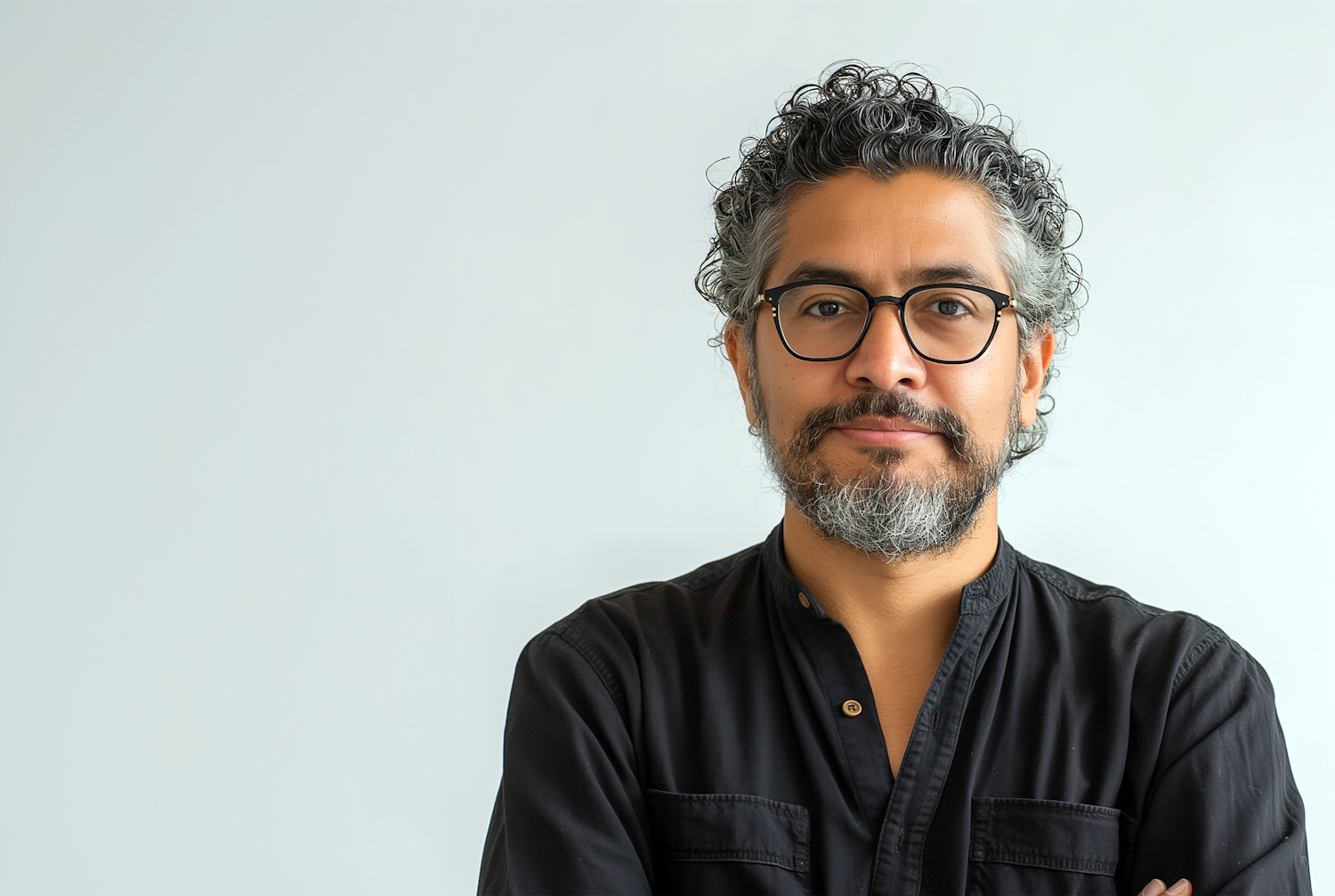
The Attorneys

Registered patent attorneys with engineering credentials

Every attorney who handles prosecution at Northgate IP holds a USPTO registration number and an undergraduate degree in engineering, computer science, or a hard science. That is not a marketing claim — it is a technical prerequisite for the work we do.

Elena Vasquez, founding partner at Northgate IP

Elena M. Vasquez

Founding Partner

USPTO Reg.
#72,841
WA Bar
#46203 — Admitted 2007
Degree
B.S. Electrical Engineering, Univ. of Washington (2003); J.D. UW School of Law (2007)
Prior
Patent examiner, USPTO Technology Center 2800 (semiconductor devices), 2003–2004

Elena founded Northgate IP in 2009 after five years in private practice at a national IP boutique. Her technical background in electrical engineering and her experience as a patent examiner give her an unusually precise read on how an examiner will analyze a claim. She focuses on semiconductor, hardware, and IoT prosecution and has managed portfolios for three Seattle-area companies through successful acquisitions.

James Okafor, partner at Northgate IP

James K. Okafor

Partner

USPTO Reg.
#75,119
WA Bar
#48812 — Admitted 2009
Degree
B.S. Computer Science, Carnegie Mellon University (2005); J.D. Georgetown University Law Center (2009)
Prior
Software engineer, enterprise storage systems (2005–2006); patent agent during law school

James leads the firm's software and cloud infrastructure patent practice. His prior experience as a practicing software engineer means he can engage with inventors at a technical depth that produces better disclosures and tighter claims. He has particular experience in distributed systems, machine learning infrastructure, and API architecture — areas where claim drafting requires precision to navigate 35 U.S.C. § 101 eligibility challenges.

David Renfrew, associate at Northgate IP

David T. Renfrew

Associate Attorney

USPTO Reg.
#79,504
WA Bar
#53901 — Admitted 2016
Degree
B.S. Mechanical Engineering, Univ. of Michigan (2012); J.D. Univ. of Washington School of Law (2016)
Prior
R&D engineer, medical device manufacturer (2012–2013); focus on FDA 510(k) documentation and design controls

David handles mechanical, medical device, and manufacturing process prosecution. His R&D engineering background is directly applicable to device claims where the line between functional and structural claiming determines prosecution success. He also manages the firm's trademark docket and advises product companies on trade dress protection for distinctive industrial design.

Common Questions

Technical answers, not boilerplate

Direct line: 206-555-0174

Northgate IP conference room with whiteboard diagrams
Can a software algorithm be patented?

Yes, but the eligibility analysis under 35 U.S.C. § 101 requires careful claim drafting. Following the Alice decision, software claims that merely recite abstract ideas without a specific technical improvement face rejection. The successful path is to claim the concrete technical result — improved system performance, a specific data processing architecture, a hardware-implemented method — not the abstract concept. Our software prosecution practice is built around this analysis. We do not file claims we expect to fail on eligibility grounds.

Should I file a provisional or go straight to a non-provisional?

It depends on your timeline and what you know. A provisional is worth filing if: (1) you are approaching a public disclosure or product launch that would start the one-year clock; (2) you need 12 months to validate the technology before committing to full prosecution costs; or (3) you are going into a funding conversation and want a priority date established. A provisional is not useful as a placeholder — it must describe the invention in enough detail to support the claims you will eventually file or it will not provide the priority date you need.

What is freedom to operate and when do we need it?

A freedom-to-operate (FTO) opinion determines whether your product or process, as it will be manufactured and sold, infringes any valid patent claims held by a third party. You typically need an FTO when: you are about to launch a product in a competitive market with active patent holders; an investor or acquirer requests one as part of diligence; or you have received a threat letter and need to assess your position. An FTO also identifies design-around options — modifications that move you outside a patent claim — before you have committed to a production architecture.

How do we protect our training data or AI model?

No single right covers AI assets comprehensively. Training data may be protected as a trade secret if it is maintained confidentially and has commercial value. The model architecture and training methodology may support utility patent claims if they constitute a specific technical implementation. Model weights and code are copyrightable. Outputs, by current law, are generally not protectable if produced without sufficient human authorship. The practical answer for most companies is a layered program: trade secret controls for data and weights, patent prosecution for the methodology, and copyright registration for the code. We can map this against your specific architecture.

Do you work with companies outside Washington State?

Yes. USPTO prosecution is federal and does not require a state license in the jurisdiction where the client is located. Our attorneys are licensed to practice before the USPTO regardless of where you are based. For trademark matters requiring state-level advice, and for IP litigation, we advise on jurisdiction-specific rules and refer to local counsel where required. We have active clients in California, New York, Texas, and internationally.

How do you handle conflicts and confidentiality?

Before a new matter opens, we run a conflicts check against our existing client list. Contacting the firm about a potential matter does not create an attorney-client relationship. Until a conflicts check has cleared and an engagement letter is signed, any information you send us is not protected by attorney-client privilege and should not include confidential technical details, trade secrets, or unpublished invention disclosures. We are serious about this. Please describe your situation in general terms until we confirm there is no conflict.

What is the difference between a trade secret and a patent?

A patent gives you a public, time-limited monopoly (20 years for utility patents) in exchange for full disclosure of the invention. A trade secret gives you potentially unlimited protection as long as the information remains confidential and has commercial value — but you get no protection if a competitor independently discovers or reverse engineers it. For a manufacturing process that cannot easily be reverse engineered from the product, trade secret protection is often preferable. For a product feature that will be visible in the market, patent protection is usually the right tool. Many sophisticated IP programs use both: patent the architecture, trade-secret the implementation details.

When should we engage IP counsel for an acquisition?

Engage us before the letter of intent, not after. Pre-LOI is when IP representations and warranties are negotiated — gaps discovered after signing typically cannot be corrected without cost adjustments or escrow arrangements. If you are the seller, we can prepare your portfolio for diligence in advance, addressing ownership chain issues and prosecution gaps that would otherwise surface as red flags. If you are the buyer, we conduct targeted IP diligence focused on the risk areas most likely to affect valuation or post-close integration.

Matter Inquiry

Submit a matter inquiry

We review all inquiries and respond within one business day. We will run a conflicts check before any substantive discussion begins.

Phone 206-555-0174
Address 600 University St, Suite 1800
Seattle, WA 98101
Seattle waterfront and skyline
Seattle, WA — UTC−8

// Conflicts check runs before any substantive response. Typical reply: 1 business day.